BASF
A Brand-Led Workplace for Hybrid CollaborationJohannesburg
Following more than two decades in the same premises, BASF South Africa relocated to Waterfall, Midrand, reimagining its workplace to align with evolving hybrid practices and its global corporate values. Appointed to deliver the design and build of the new 1,000 sqm office, Trend Group translated this shift into a contemporary, adaptable environment that supports collaboration, focus and employee wellbeing. The project was developed in alignment with BASF’s global workplace guidelines and corporate design criteria, ensuring consistency with the company’s international Real Estate and Facility Management standards.
Concept & Brand Integration
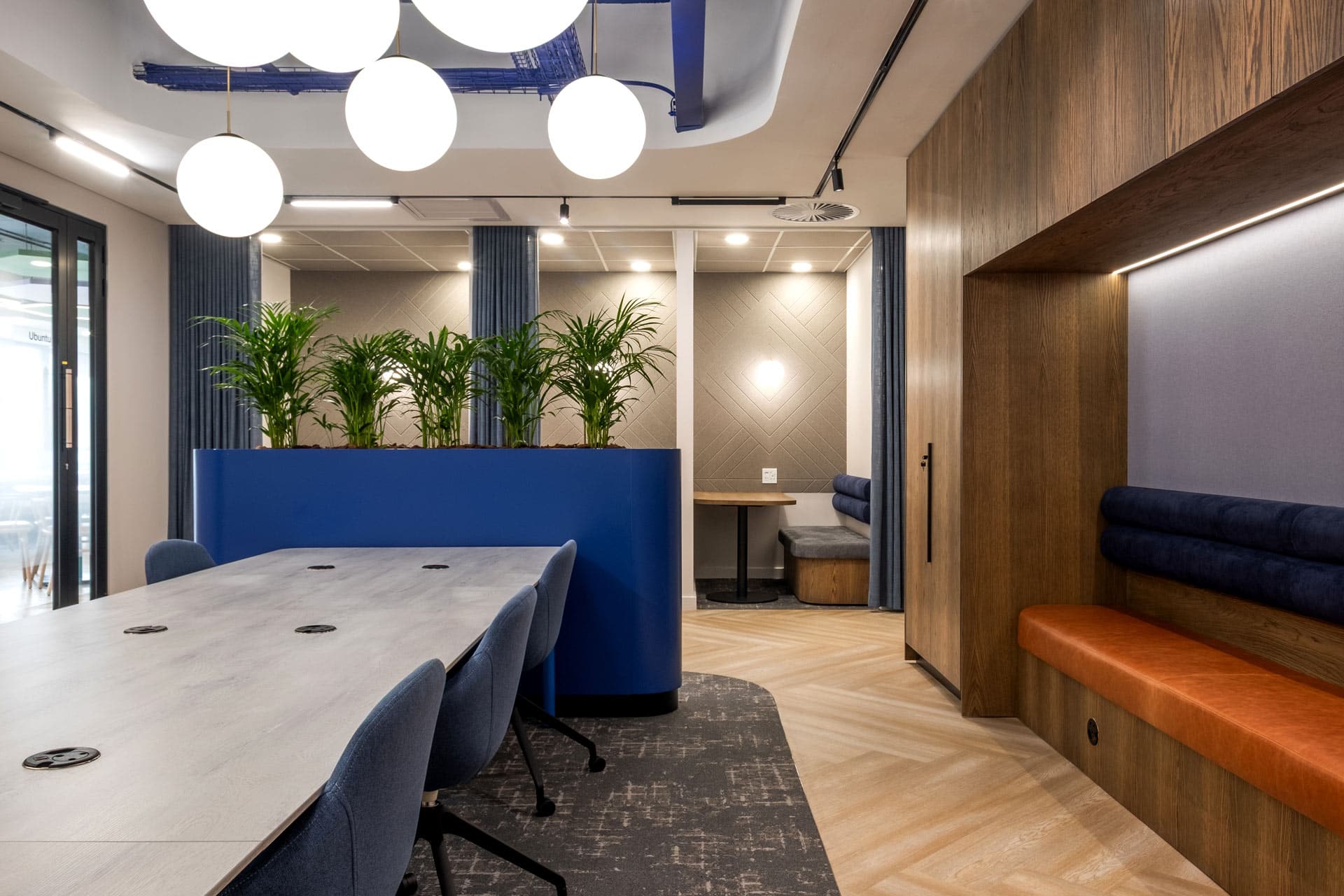
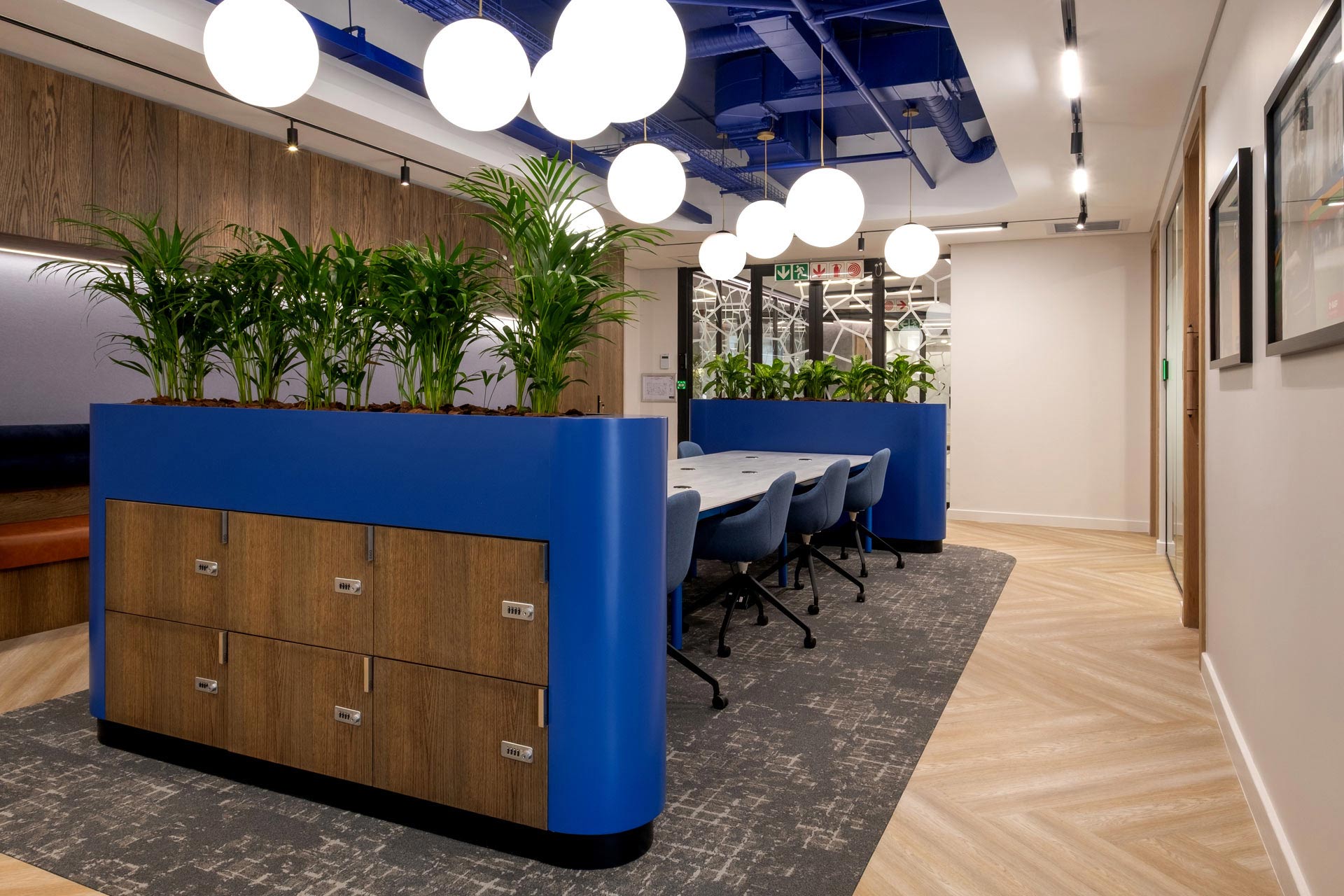
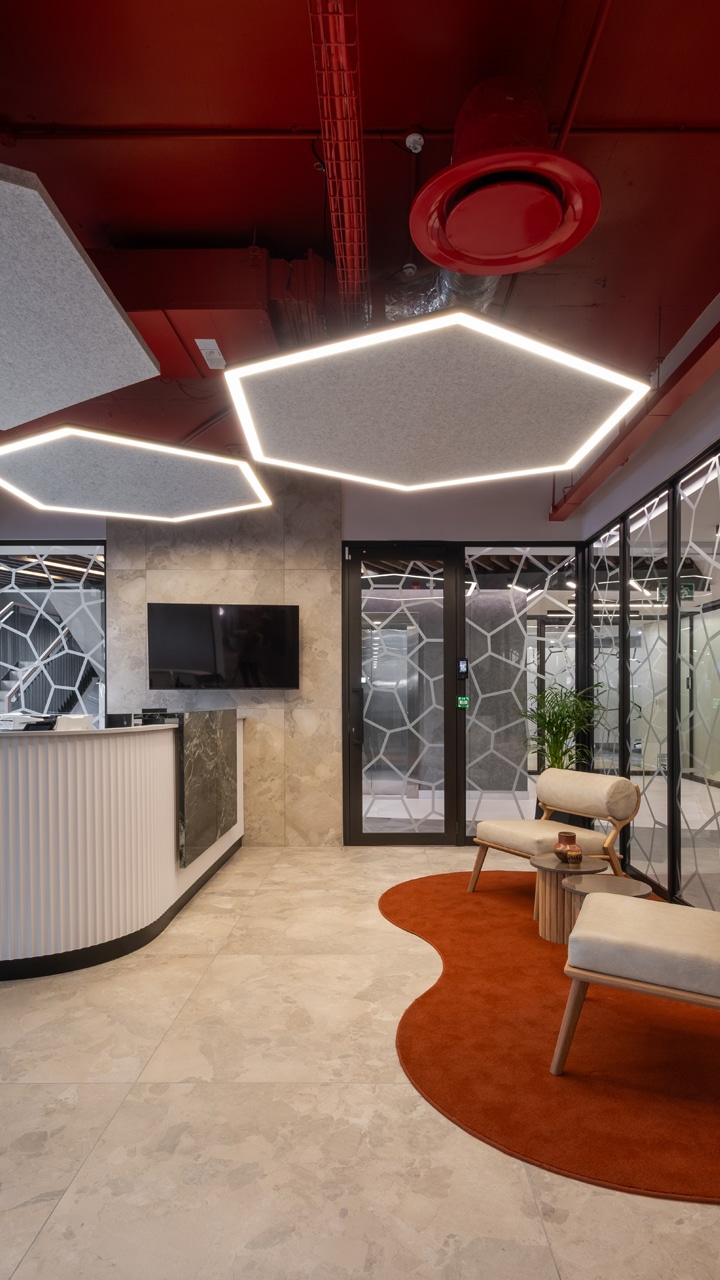
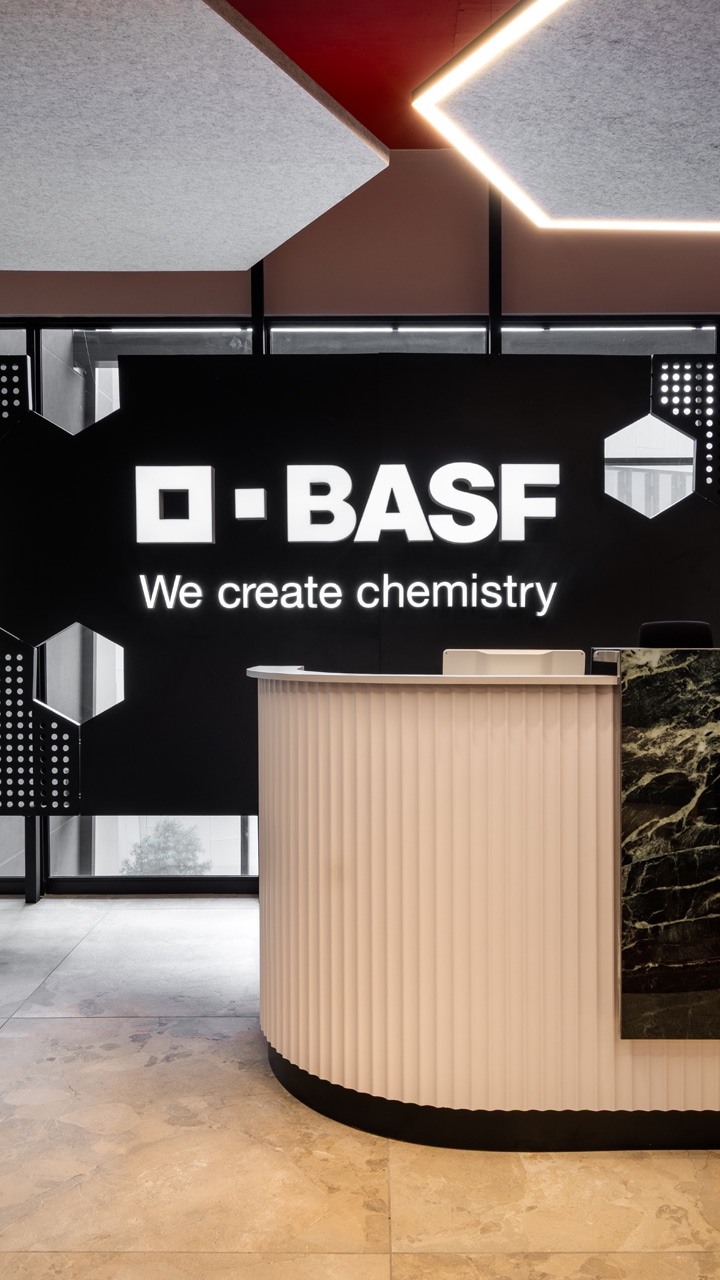
Developed by Trend Group, the design draws directly from BASF’s core values – creative, open, responsible and entrepreneurial – expressed through the company’s distinct brand colours and embedded spatially throughout the workplace. At reception, the visual identity is articulated with clarity and control, establishing a confident first impression. Blue anchors the environment, while accents of green, yellow and red introduce rhythm and vitality, subtly defining different zones. These vibrant tones are balanced by a neutral foundation and natural materials, creating an atmosphere that feels energised yet grounded; expressive of BASF’s global identity while remaining human in scale.
Spatial Planning & Hybrid Working
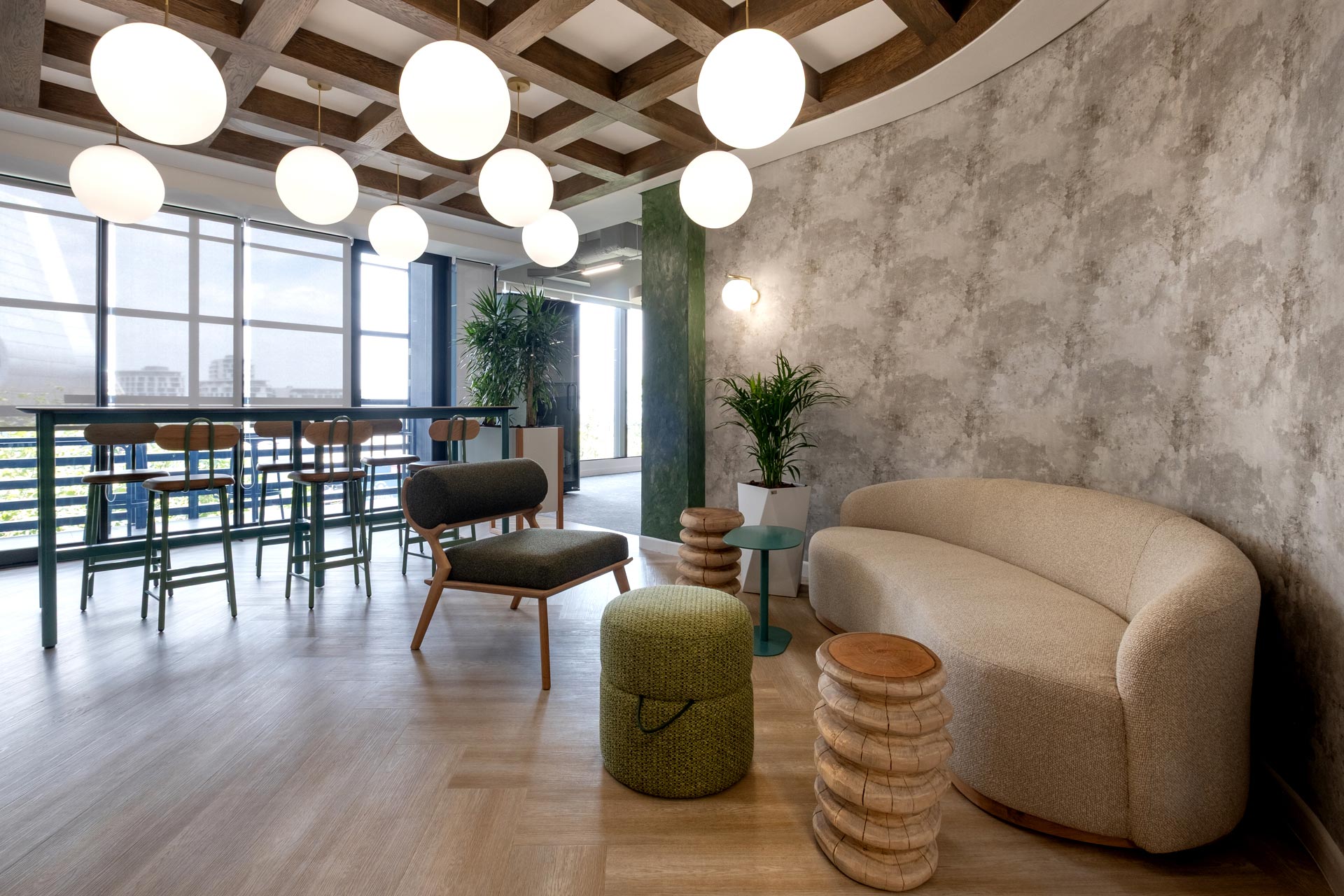
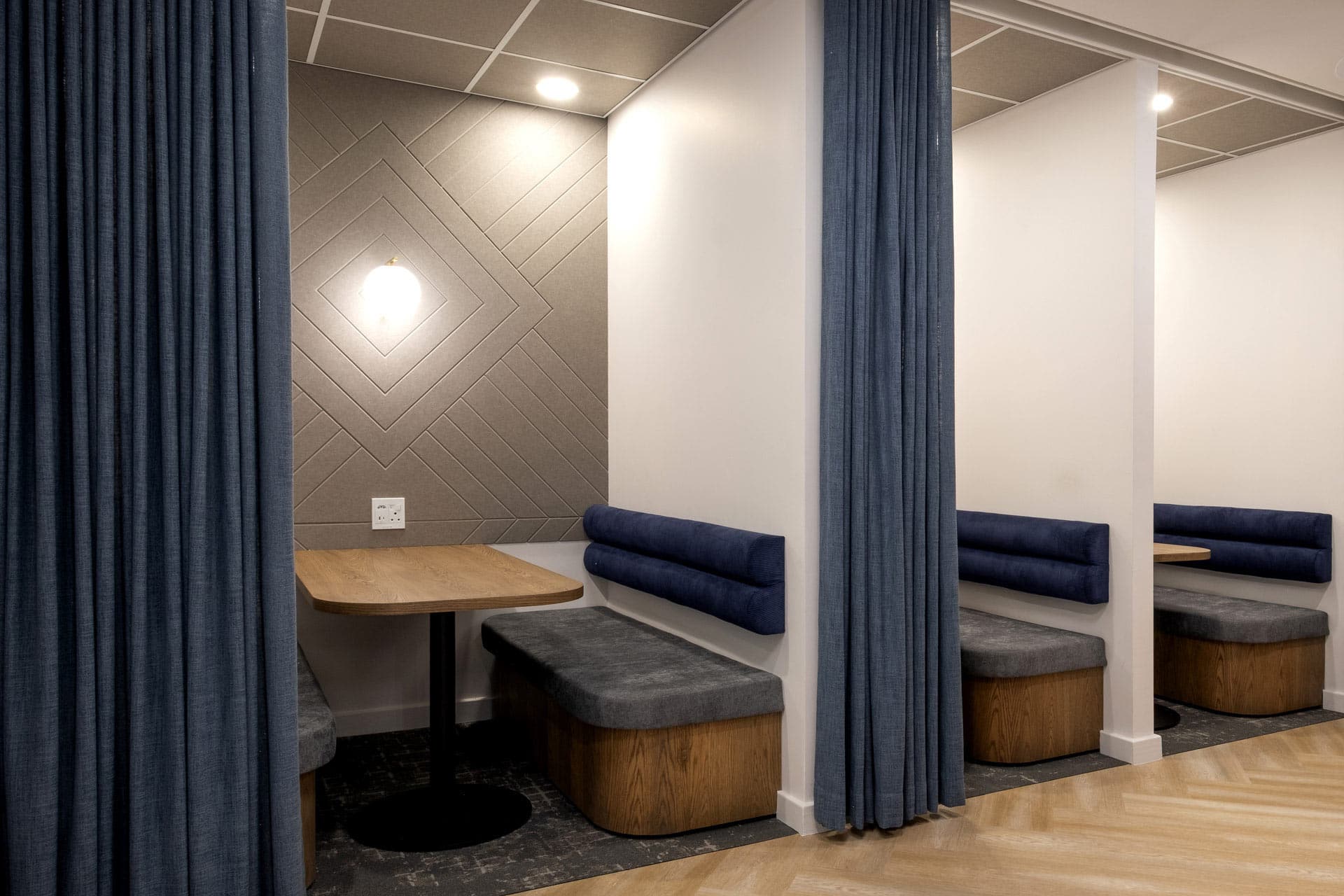
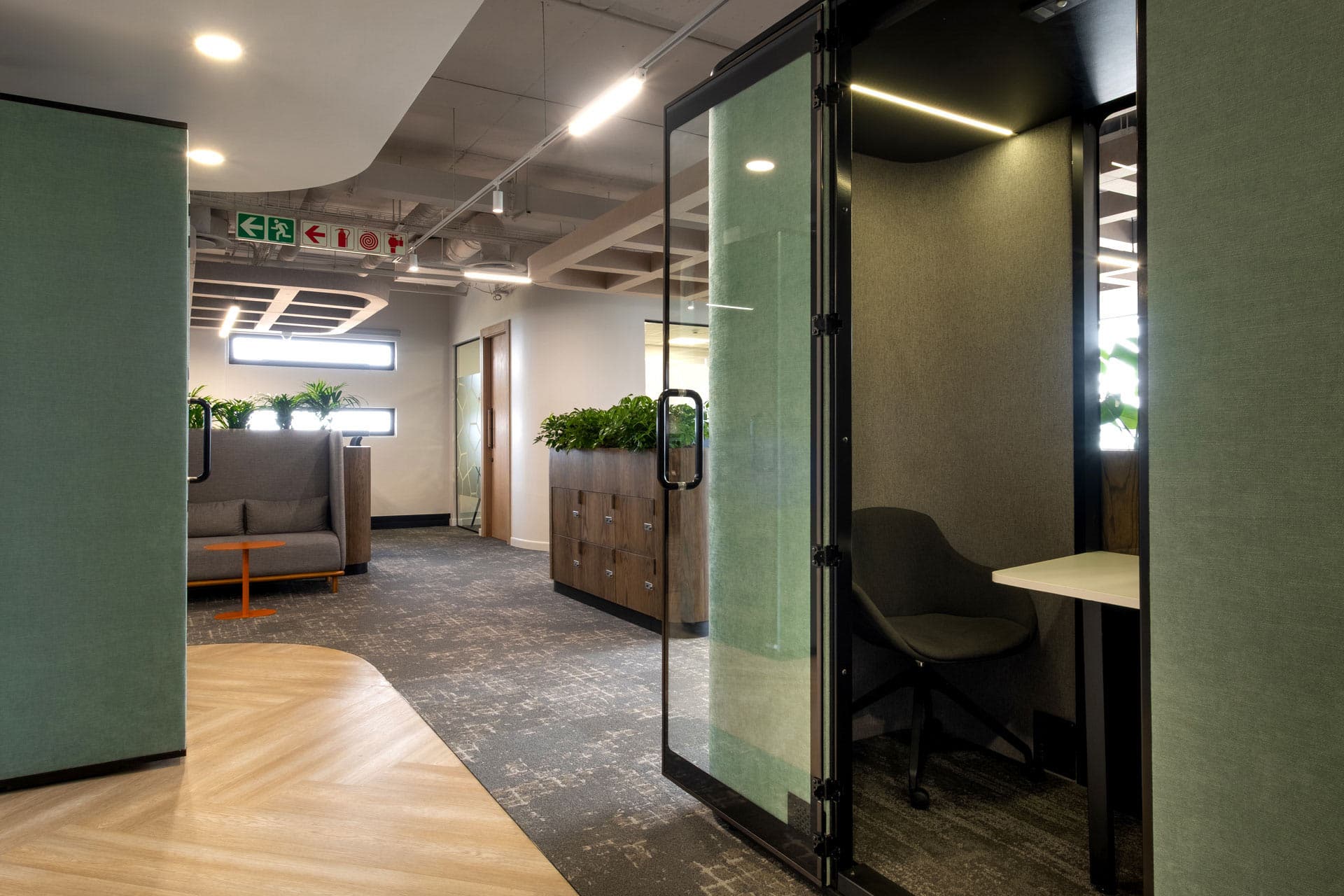
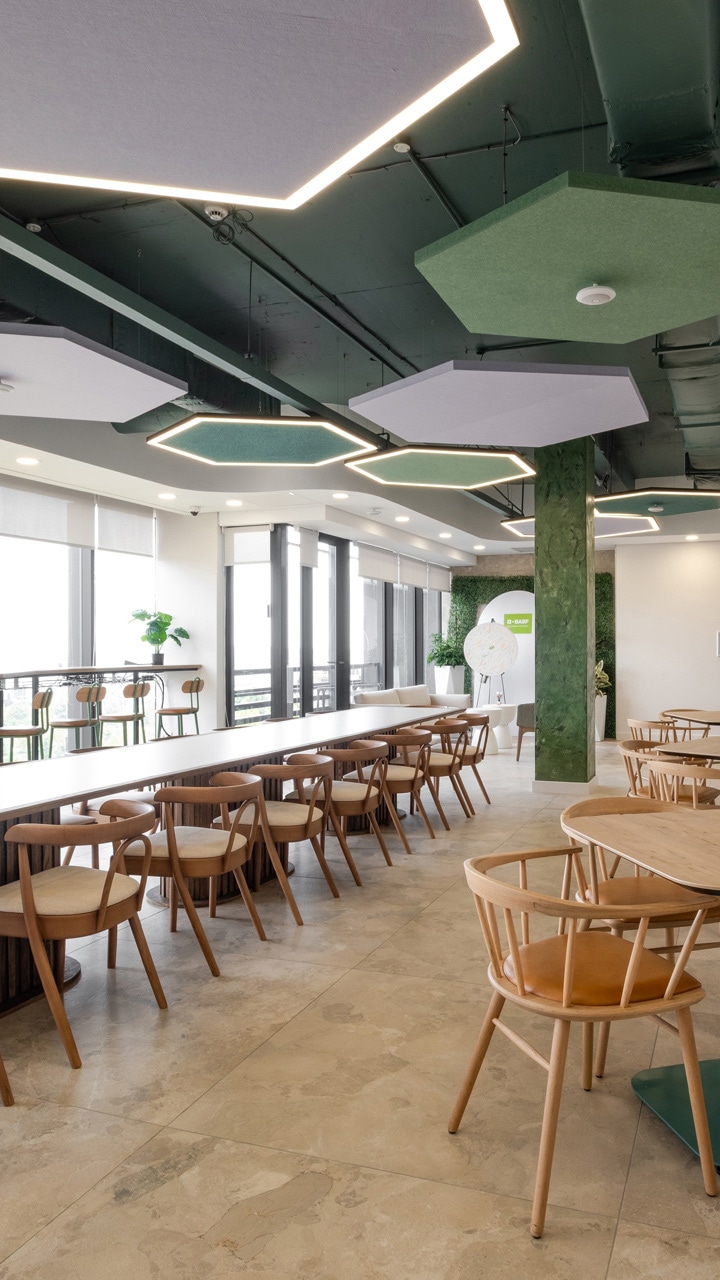
The layout reflects a shift toward activity-based hybrid working, balancing open-plan workstations with enclosed meeting rooms, acoustic call pods, touchdown areas and social spaces. Structured around a formal zoning model, the workplace offers distinct settings for focused and collaborative work. Workstations are non-dedicated, enabling a flexible hot-desking environment supported by plug-and-play infrastructure. The canteen operates as a social hub, with varied seating arrangements that encourage informal interaction and connection.
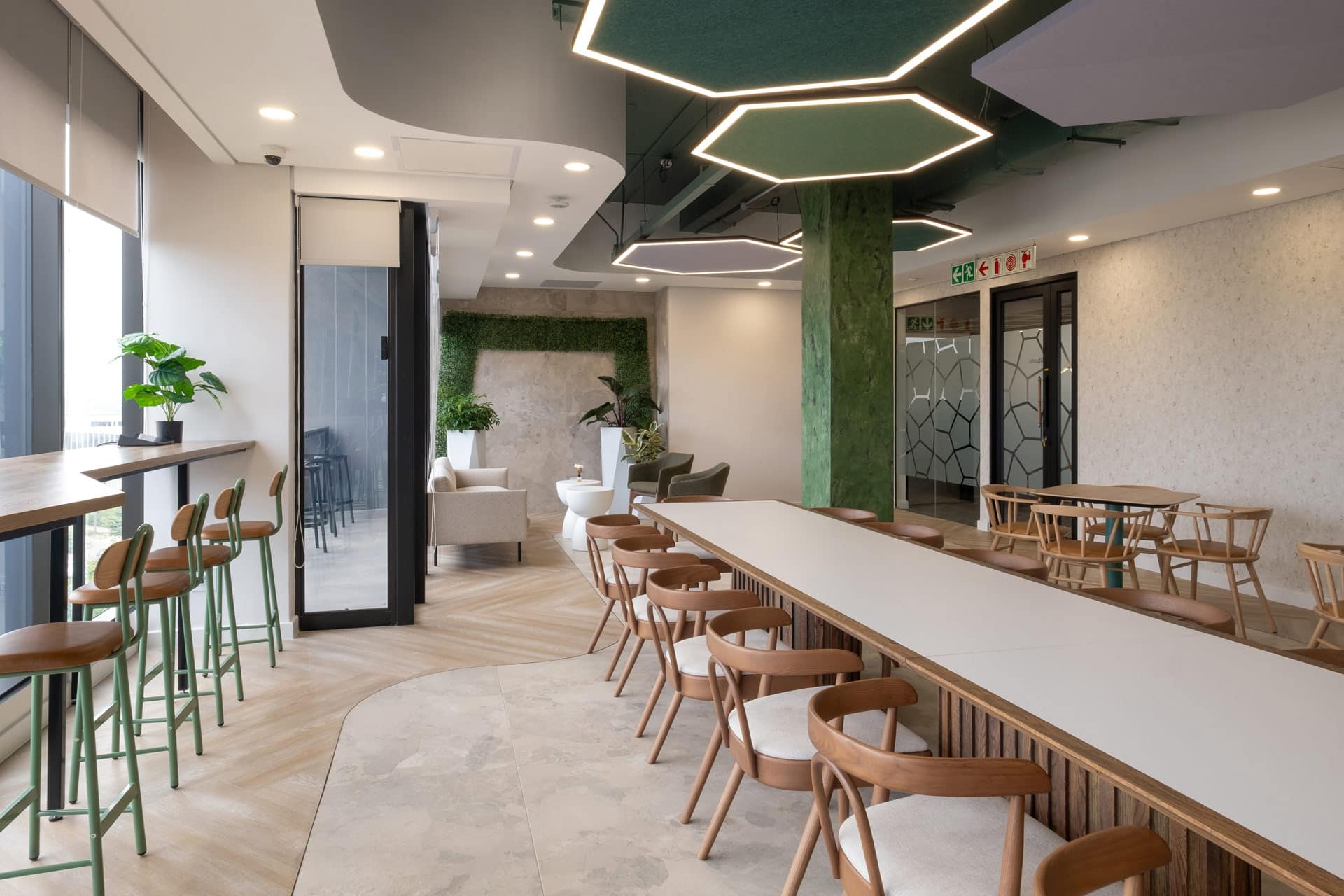
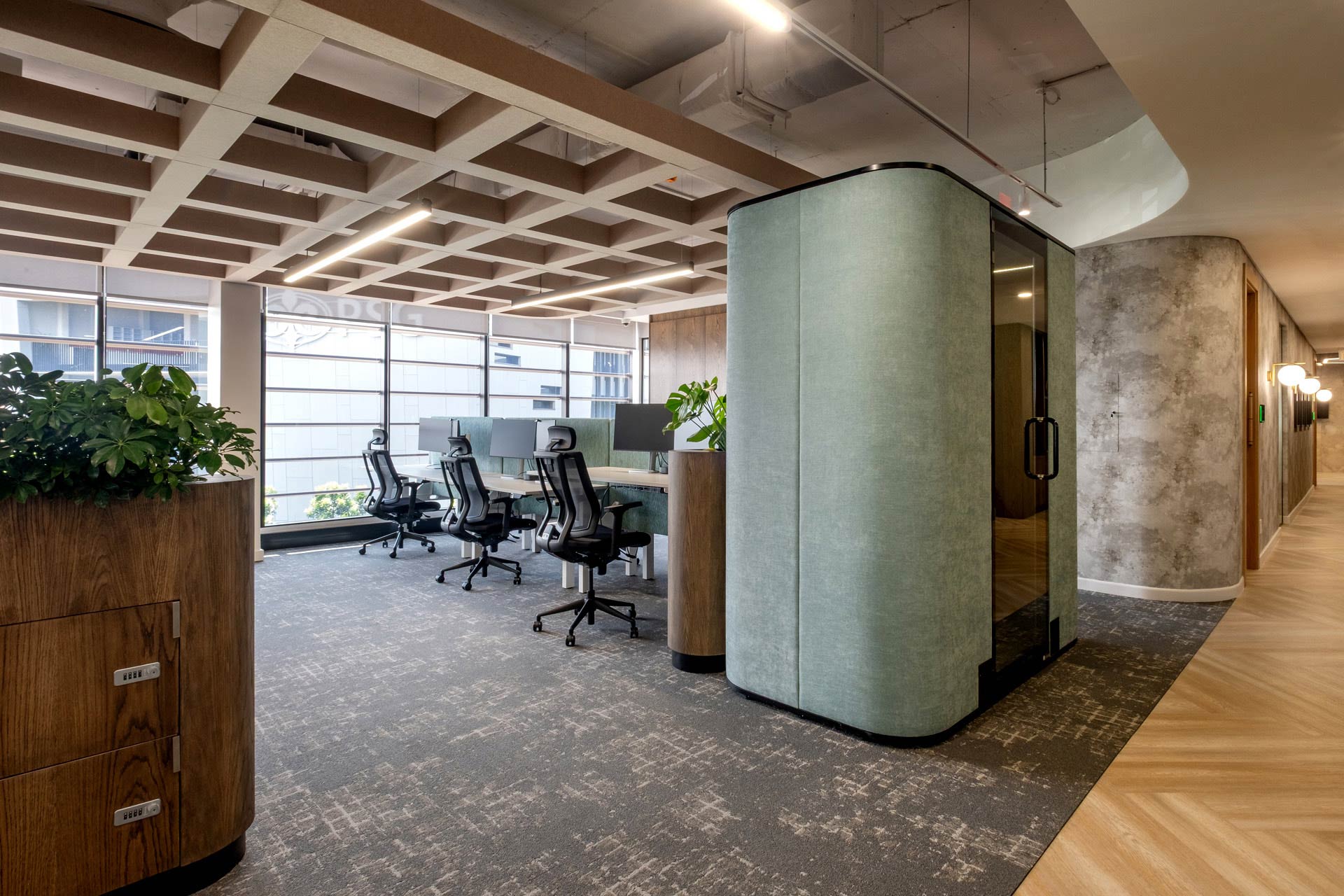
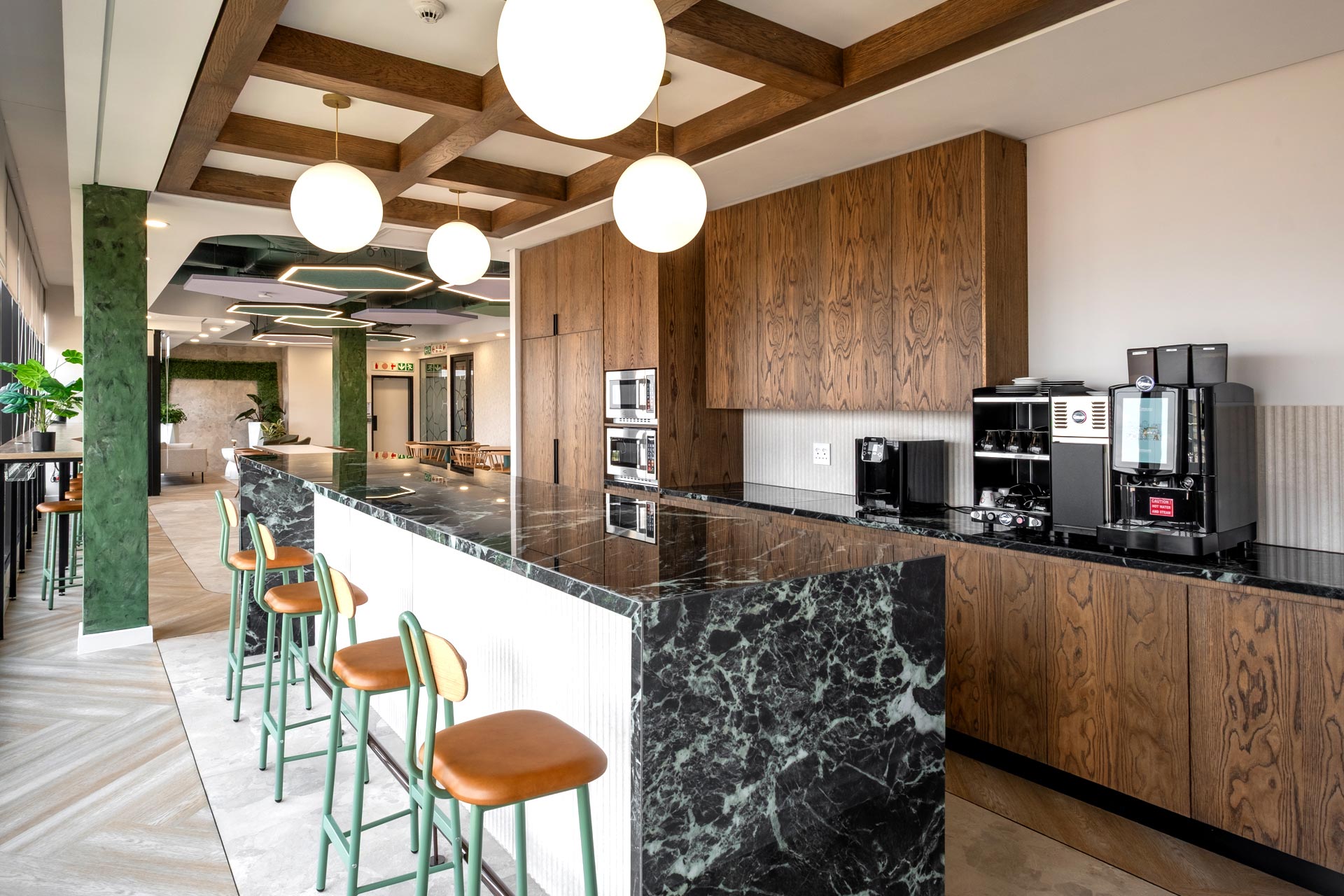
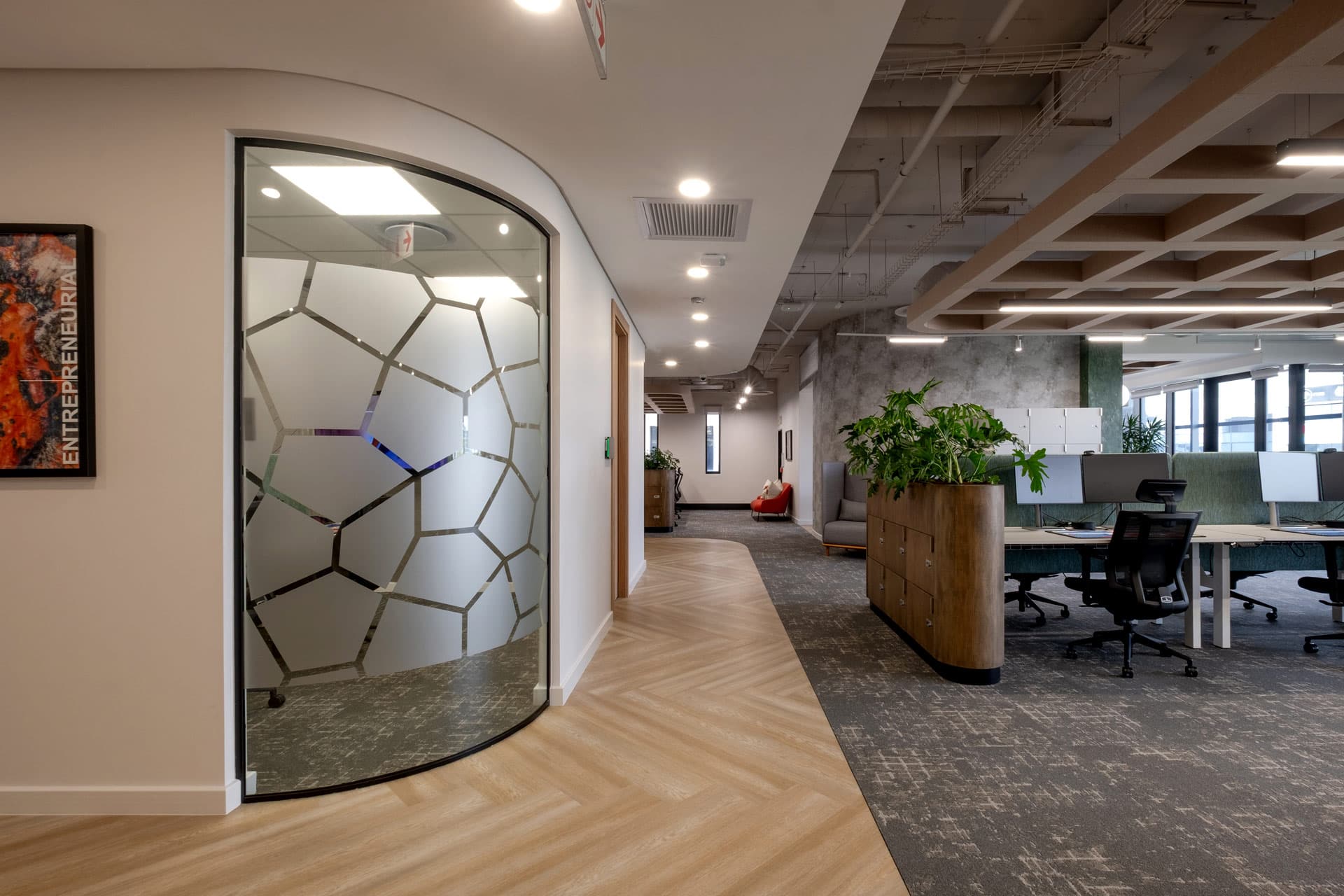
Adjacency planning reinforces this hierarchy. Silent and focus areas are positioned away from lively zones, with storage areas, circulation corridors and phone booths acting as buffers between high- and low-noise environments. Collaboration areas are located along circulation paths to encourage interaction without disrupting deep-focus workstations, while coffee and breakaway spaces are separated from concentrated desk clusters. Workstations were also positioned to maximise natural daylight while limiting exposure to high-traffic disruption.
Materiality & Detail
Material selection plays a defining role in the workspace. A porcelain slab is used consistently across joinery surfaces, creating a unifying thread that links different areas and reinforces cohesion.
Dark-stained oak veneer introduces warmth, while acoustic finishes and fabric elements soften the palette. Ceiling treatments across open-plan areas enhance both performance and visual rhythm. Custom-designed elements are integrated throughout, reinforcing the bespoke character of the project.
Furniture, Technology & Adaptability
Furniture was specified and delivered by Design Colab, with a focus on ergonomics, durability and long-term flexibility. The workspace includes Design Colab’s locally designed and manufactured height-adjustable workstation, The Motion, supporting individual comfort within the non-dedicated desk environment. Modular boardroom tables accommodate both formal meetings and larger town hall sessions, allowing the space to scale as required.
Adaptability extends across the workplace. Informal breakaway spaces and hot-desking zones were configured to support varied work modes, while digital room-booking systems and plug-and-play infrastructure enable seamless mobility throughout the office. Acoustic interventions, including call pods and ceiling treatments, further enhance comfort and concentration, creating a technology-enabled environment that supports both individual preference and collective performance.
Sustainability & Performance
Sustainability informed material selection and supplier partnerships, with an emphasis on durability, responsible sourcing and long-term performance. Flooring was specified from manufacturers with strong environmental credentials, including Belgotex carpets and low-VOC luxury vinyl tiles to support healthier indoor air quality in high-traffic areas. Joinery materials were sourced from responsibly managed timber suppliers such as PG Bison, reinforcing a commitment to sustainable forestry practices, while porcelain and stone finishes were selected for their longevity and resistance to wear.
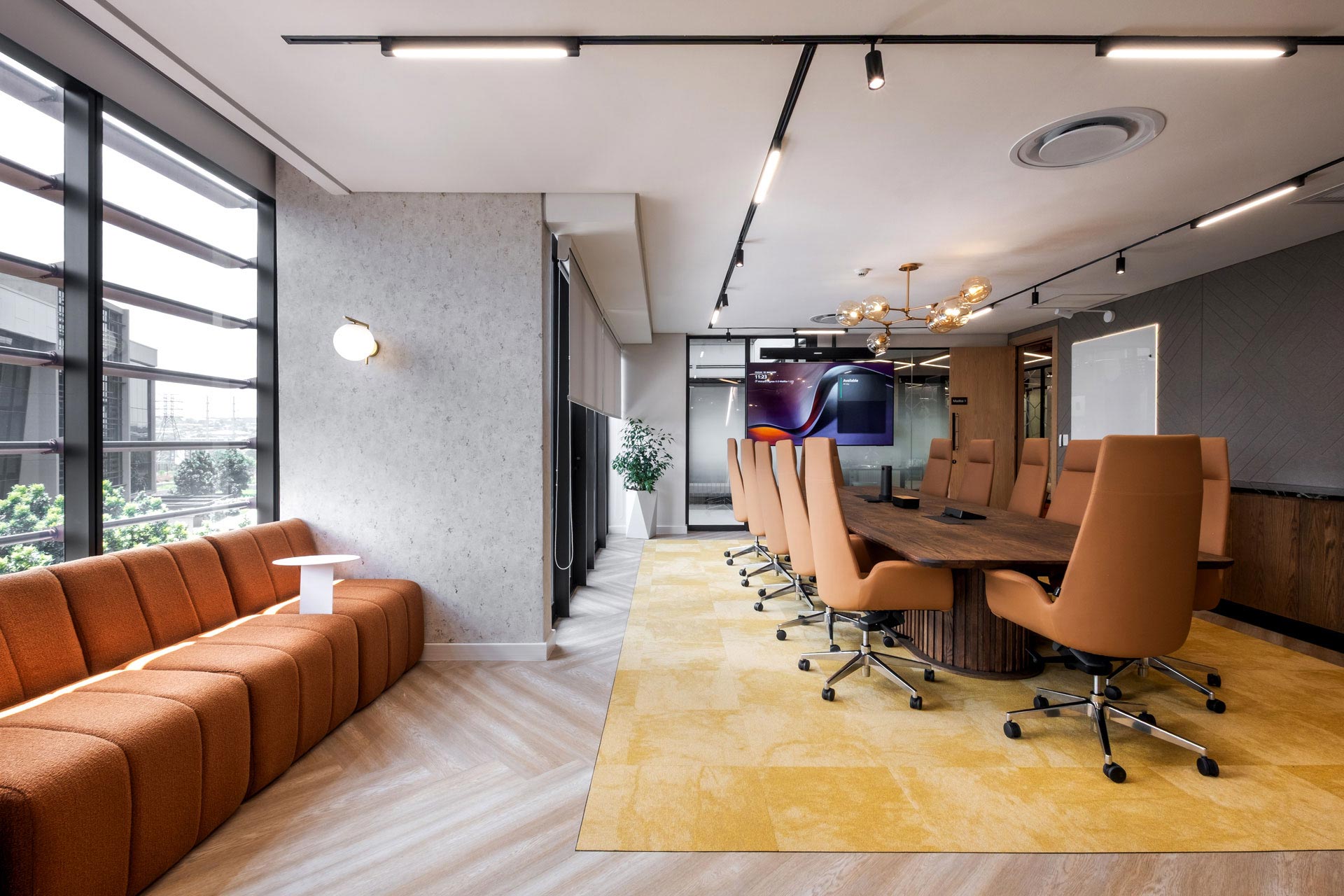
Recycled PET acoustic panels further enhance both environmental performance and occupant comfort. Biophilic elements were incorporated throughout the office, with planting integrated across work zones to introduce softness and connection to nature. Décor elements sourced from local artisans reinforce regional identity while supporting local talent. Together, these strategies contribute to a workplace that balances environmental responsibility with wellness and everyday functionality.
Workplace Experience
Through a considered design process, Trend Group supported BASF’s transition into its new premises, guiding the relocation toward a more collaborative and adaptable workplace model. The completed environment fosters greater interaction across departments, breaking down silos and encouraging faster decision-making. The result is a fresh, energising workplace that employees actively choose to engage with.