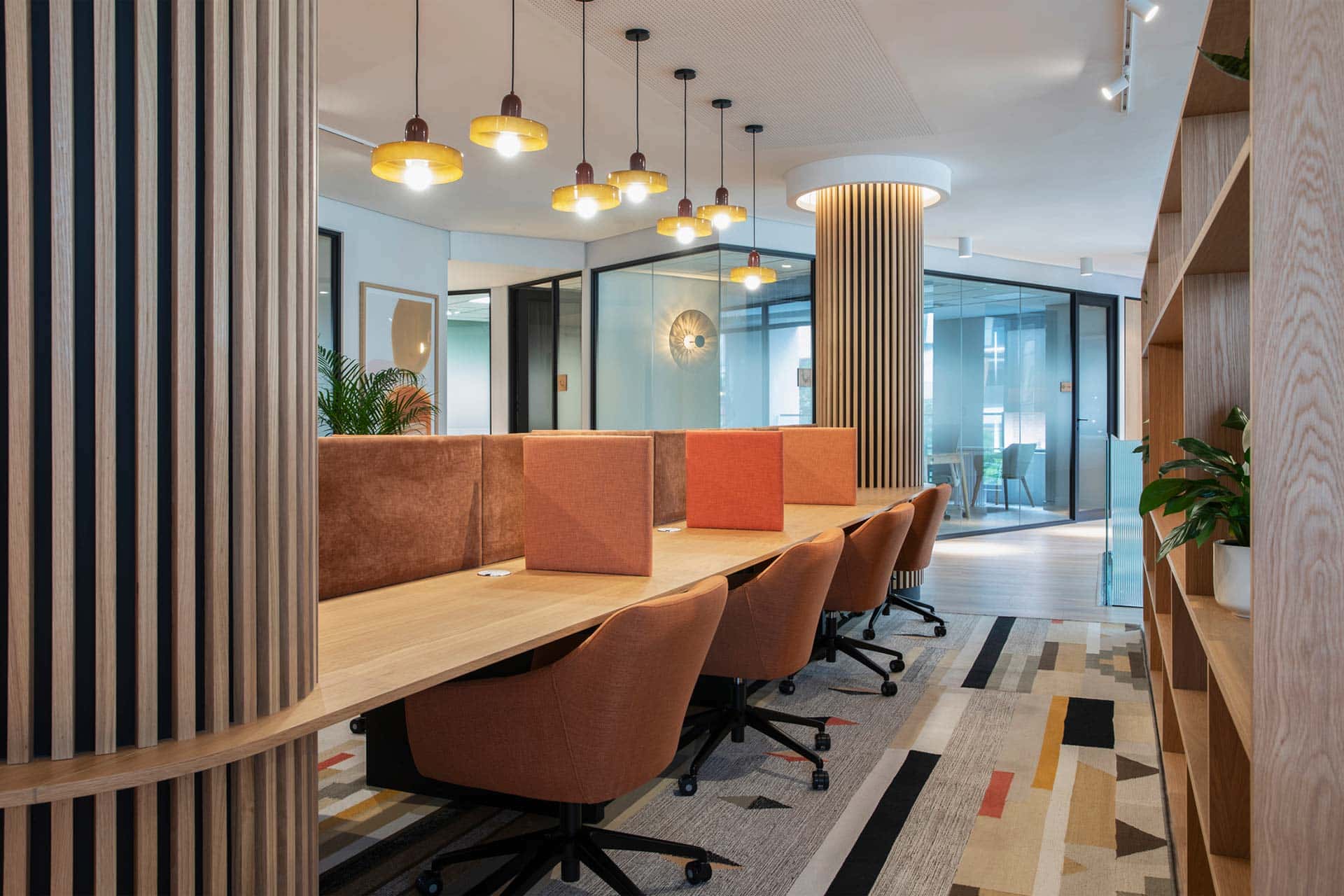
The Next Generation of Workspaces: 2026 Insights on Office Design
The way we work is shifting once more. As hybrid work patterns stabilise and office attendance rises globally, organisations are reassessing what their workplaces truly need to deliver. For many, 2026 represents a decisive turn away from purely aesthetic design and towards environments that are functional, comfortable, and intentionally crafted to support people.
At Trend Group, our designers are seeing these shifts play out in real time across markets, and the insights align closely with leading global research. Today’s offices must work harder than ever: they must inspire, support focus, reflect culture, enable connection, integrate technology, and remain adaptable and cost-conscious.
What the Data Says: Productivity, Noise, and Hybrid Stability
Recent statistics highlight the urgency of this evolution. Noise and distraction remain the number one barrier to productivity worldwide.
Open-plan layouts, once seen as the hallmark of modern office culture, are no longer supporting the concentration people need—especially after becoming used to working from the quiet of their own home. At the same time, Tomorrow’s Office reports that although hybrid work has normalised, office attendance is rising across many regions. This increase is placing fresh pressure on space, seating, and shared resources. Together, these data points signal a global recalibration of how workplaces function.
The New Priority: Quiet, Focused, and Calm Work Environments
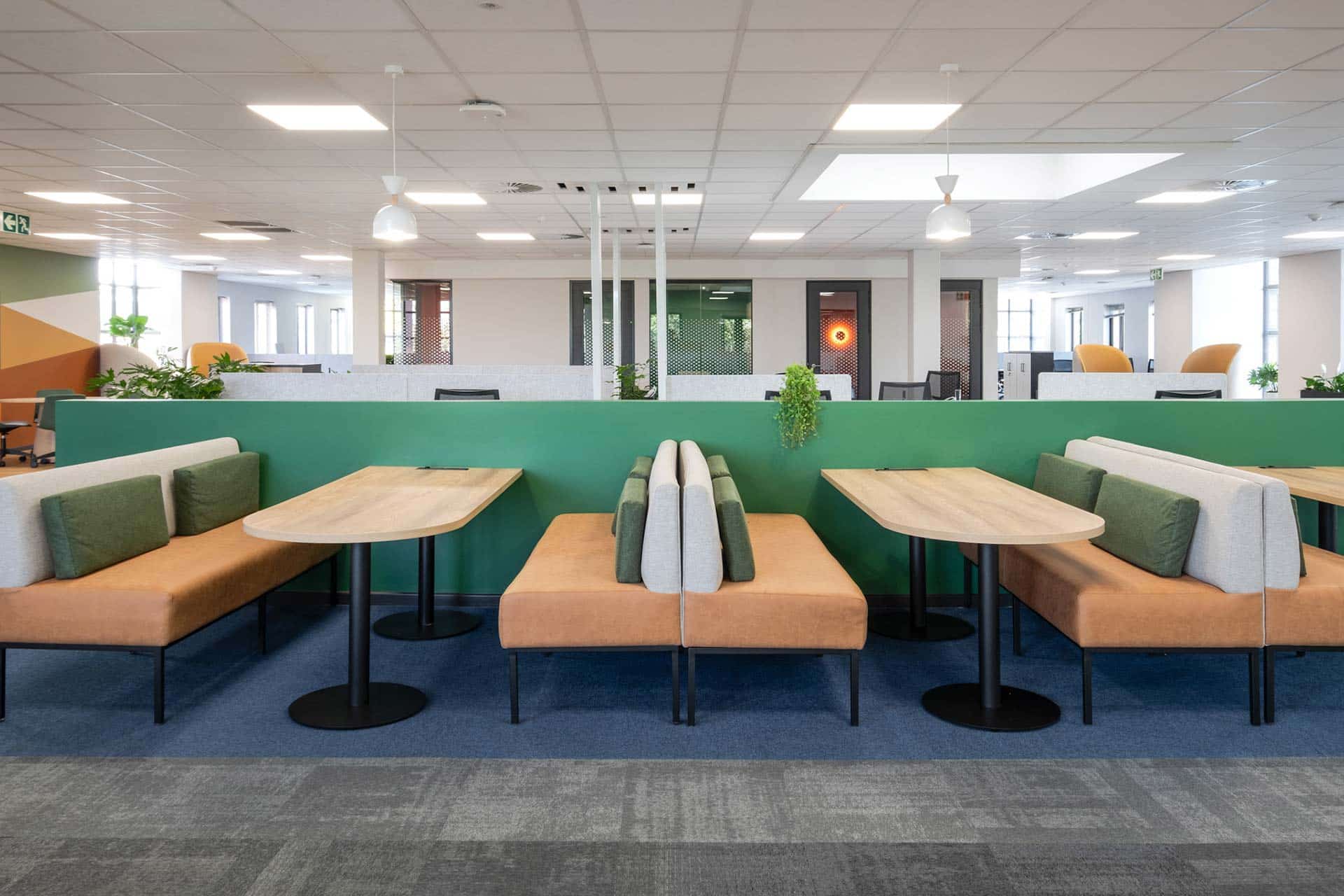
One of the most significant shifts for 2026 is the rise of quiet. After years of hyper-open layouts, organisations are acknowledging the need to mitigate sensory and digital overwhelm. Teams are seeking spaces that support deep work without constant interruption.
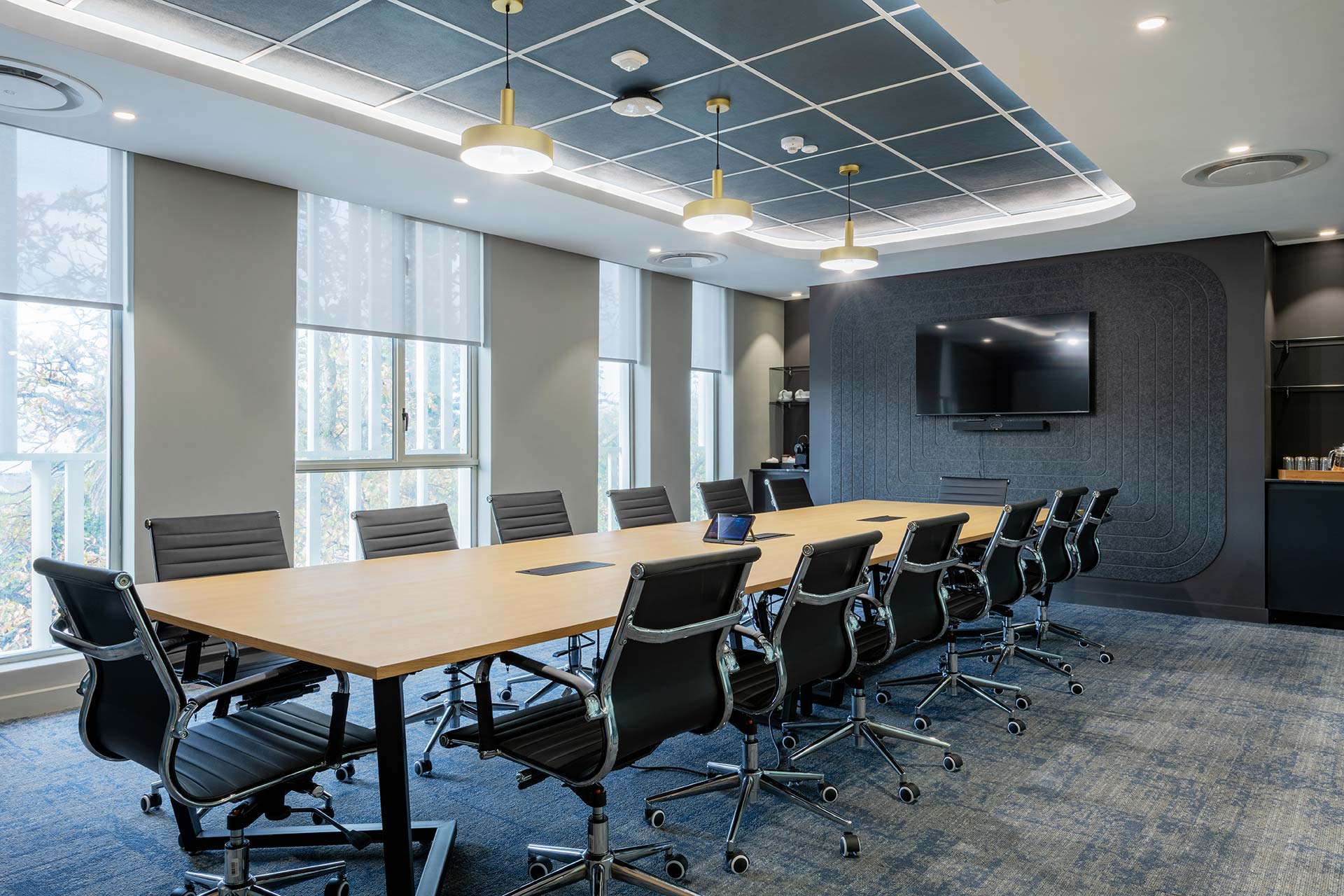
As a result, there is a notable resurgence in semi-private offices, phone booths, acoustic pods, and sound-absorbing materials that create pockets of calm throughout the office. These breakaway spaces focus on restorative experiences rather than group interaction. By restoring this balance, companies can directly improve staff productivity and wellbeing.
The Warmth of Resimmercial Design
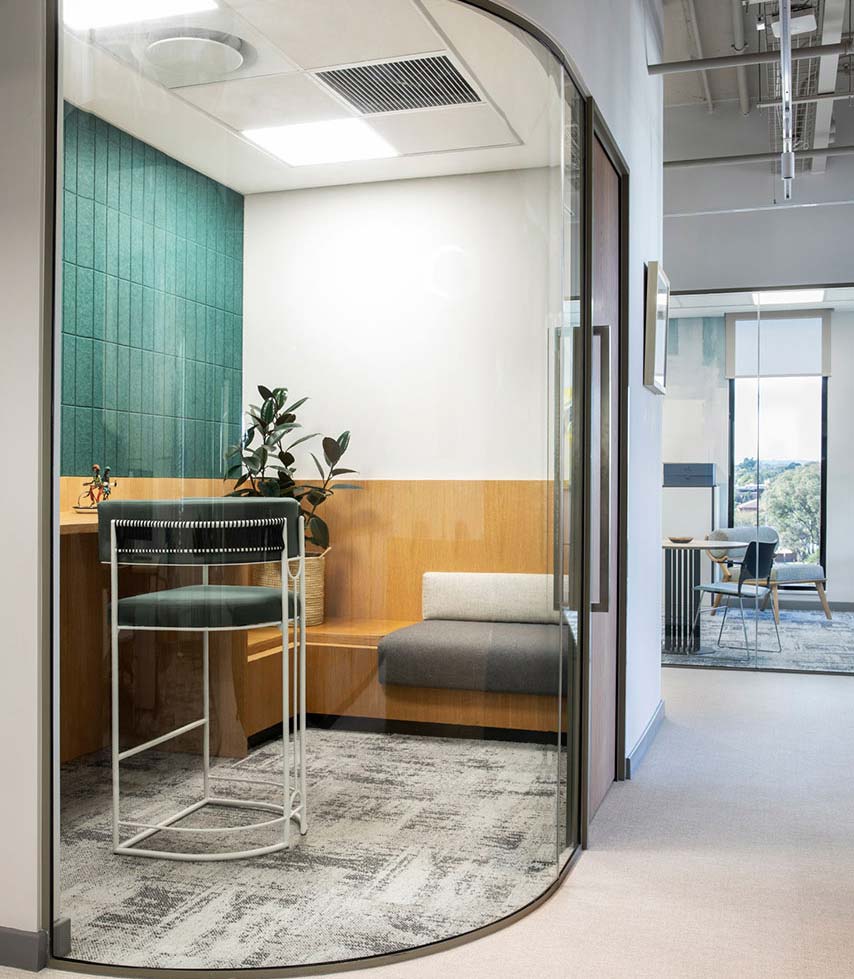
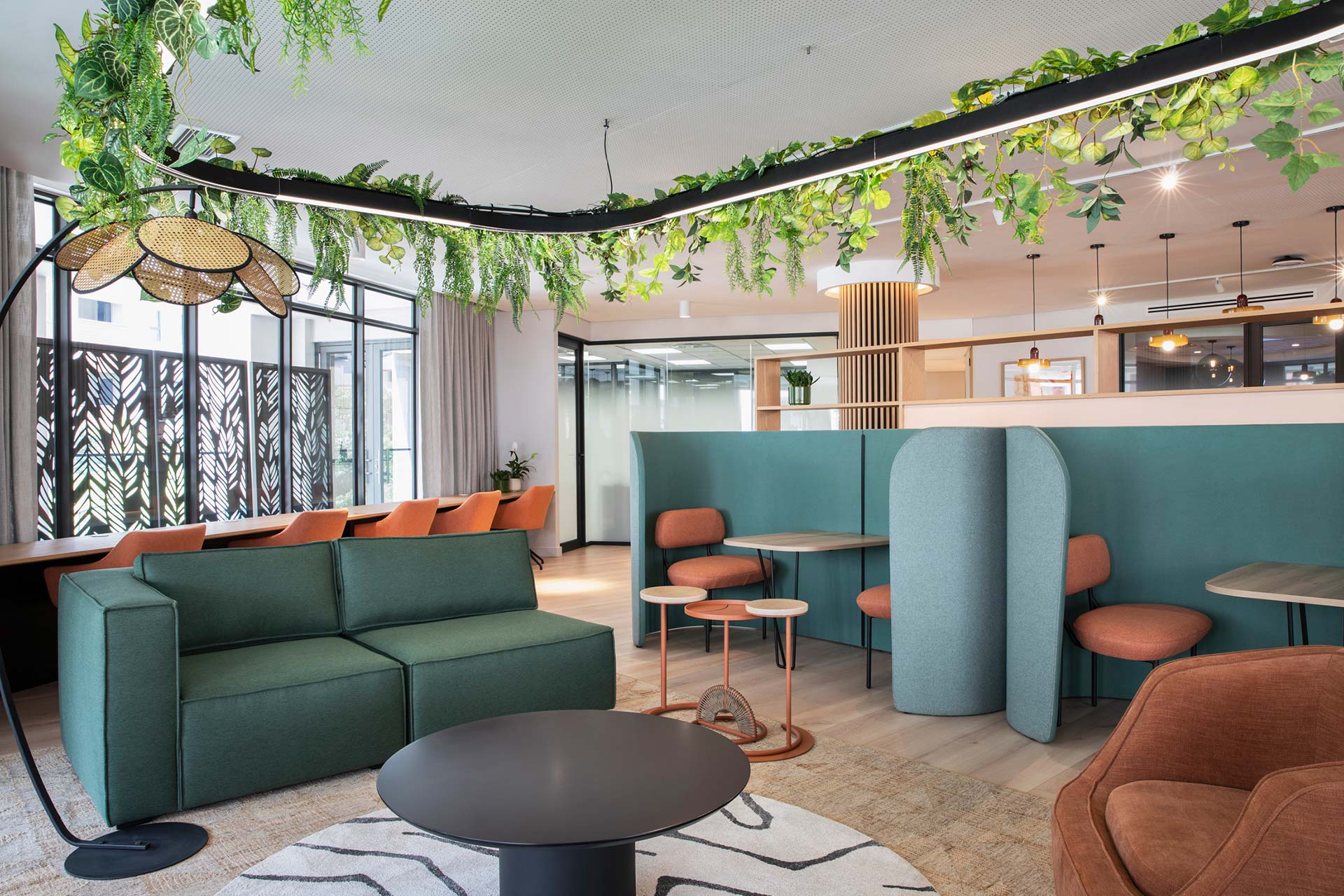
In parallel, office interiors are embracing a richer, more residential aesthetic. The “resimmercial” movement, which blends residential warmth with commercial durability, is maturing into something more sophisticated. Offices are becoming layered, textured, and emotionally supportive spaces that feel comfortable to be in.
Designers are using warmer palettes (dark woods, earthy tones, blues as new neutrals), tactile materials, curated décor, and layered lighting to create zones that help employees feel more comfortable. This shift acknowledges that psychological support is a core driver of performance. Workers thrive when the office feels welcoming, so there is a move away from corporate minimalism as companies lean into sensory design.
Designing for the Crowded Office
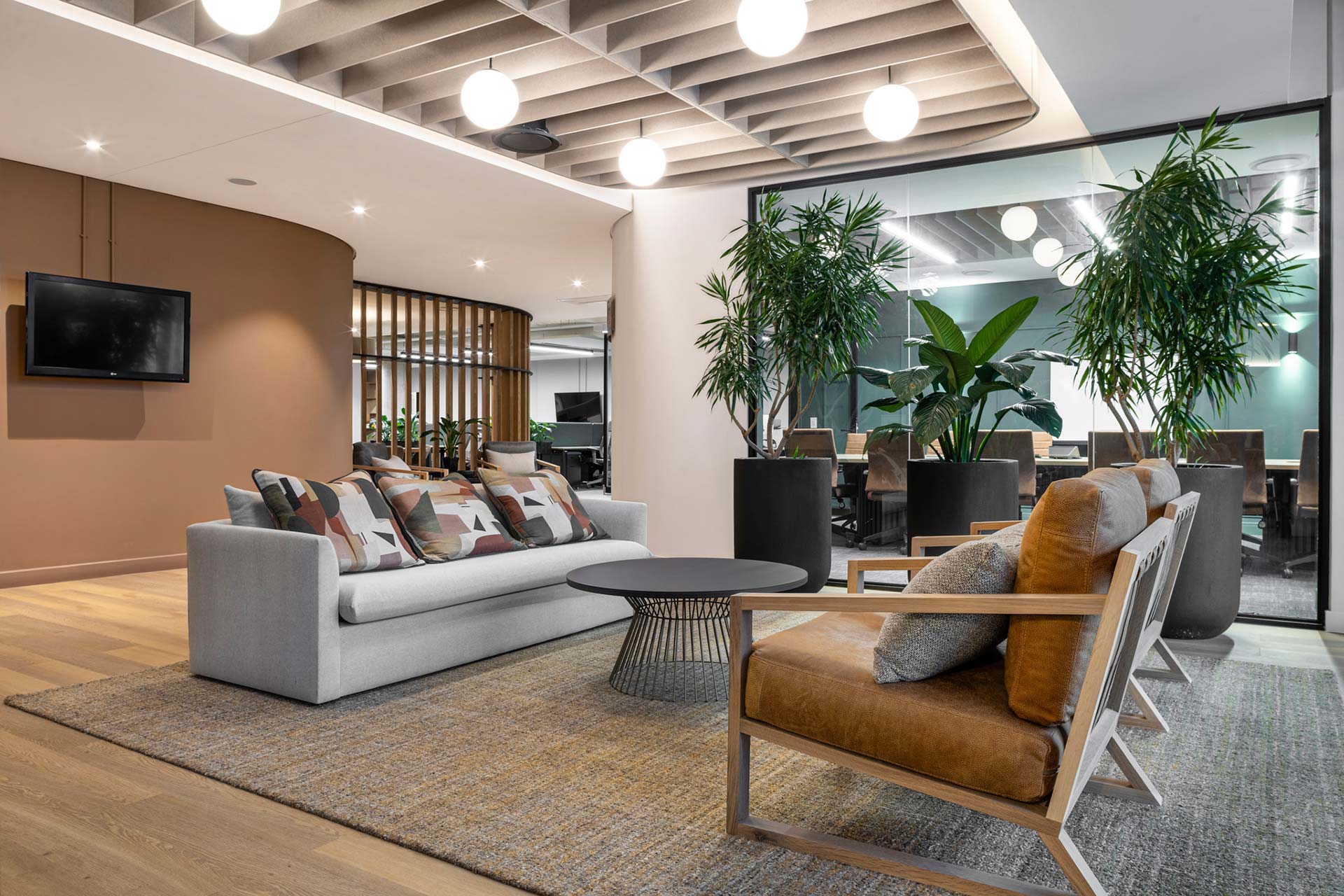
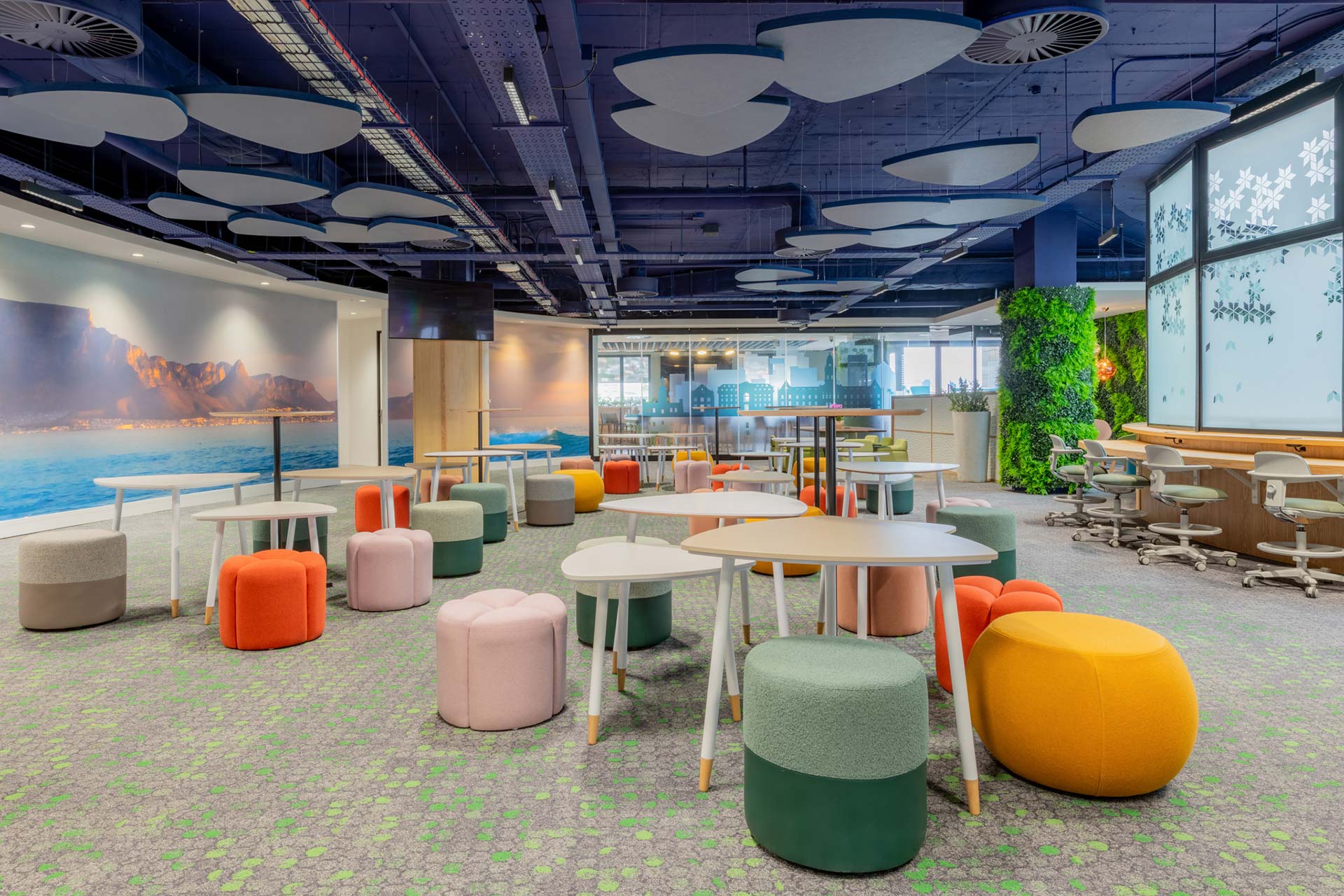
Another major trend shaping 2026 is the recalibration of hybrid work. With more teams returning to the office more frequently, workplaces are feeling the strain. The need for additional seating, meeting rooms, collaborative spaces, and flexible zones is growing.
Work styles now happen in bursts as employees shift between focus, collaboration, socialising, and hybrid meetings throughout the day. In response, offices must become more adaptable – think smart planning, multi-use zones, moveable furniture, plug-and-play technology for “hoteling” setups, and agile workstations. Flexibility is no longer optional; it’s the foundation of a future-ready workplace.
Connection as the New Workplace Currency
As remote work has highlighted what cannot be replicated digitally, organisations are reframing the office as a hub of culture, mentorship, and shared experience. Workplaces that intentionally foster connection are seeing higher retention and stronger engagement.
Employees stay longer when they feel that their physical environment reflects the identity and values of the organisation. Café-style gathering spaces, zen rooms, and lighting that considers neurodivergent needs are becoming integral to creating offices where people genuinely want to spend time.
Sustainability Sometimes Means Doing More With Less
To reduce potentially high costs, we’re seeing companies embracing more strategic, financially conscious approaches to sustainable design. Reuse and refurbishment are gaining traction, with organisations increasingly opting to reupholster existing furniture, refresh finishes, and specify modular systems that can adapt over time.
There is also a renewed focus on longevity and on sourcing materials and products locally. These decisions reduce environmental impact while keeping projects within budget into 2026.
Technology That Elevates Work
Smart systems, AI-enabled booking tools, digital collaboration platforms, and data-led space planning are transforming how work environments function. Wireless-first, plug-and-play environments allow rapid reconfiguration, while data-driven design optimises space usage and informs evidence-based layout decisions.
Designing for Tomorrow’s Workforce with Trend Group
Together, these insights point toward a clear direction for the future. The next generation of workspaces is purpose-driven and deeply human. Offices are being designed to balance focus with connection, comfort with performance, flexibility with identity, and sustainability with cost-efficiency.
For organisations ready to evolve, now is the moment to rethink how space supports strategy. And there’s no one that understands high-performance commercial interiors better than Trend Group. Our team combines global insights with local execution capabilities to deliver offices that perform for people, reflect culture, and stand the test of time.
Whether it’s the right acoustic, sensory, technological, or sustainable solution you might need, we help clients deliver future-ready workplaces that support their people